
GRC Work for Temple Elevations, Shikhar Design & Commercial Facades
Elegance in Every Facade
Be it building columns, cornices or specialised domes, we can work with GRC to enhance every architectural design.
What Is Glass Reinforced Concrete (GRC)?
Glass Reinforced Concrete — commonly known as GRC or GFRC — is a modern building material that combines alkali-resistant glass fibres with a cement and fine aggregate mortar. The result is a composite material that is up to 75% lighter than ordinary concrete, yet significantly stronger in terms of flexural and tensile resistance.
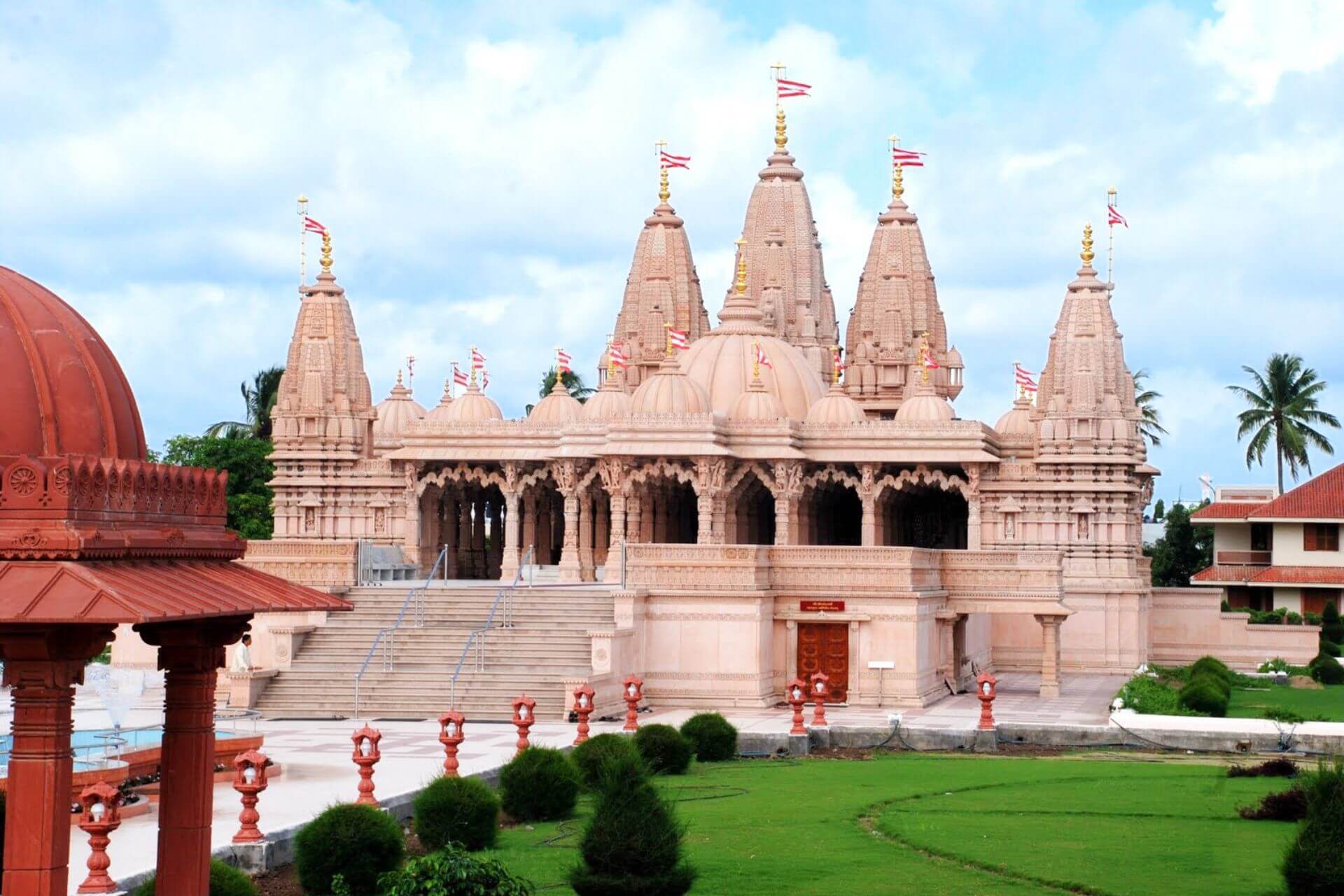
GRC can be moulded into virtually any shape — from intricately carved temple shikhar panels to sleek commercial building facades. It does not rust, rot, or corrode, and it stands up to harsh weather conditions over decades with minimal maintenance. These qualities make GRC the preferred material for both sacred architecture and modern construction projects across India.
At The Yogi Art, we specialise in custom GRC work that blends traditional craftsmanship with the strength and precision of modern materials — bringing your vision to life exactly as you imagine it.
GRC Temple Elevation Honouring Tradition with Modern Strength
A temple’s elevation is its soul. The façade communicates devotion, identity, and cultural heritage before a devotee even steps inside. At The Yogi Art, we craft GRC temple elevations that honour the richness of Indian temple architecture — from the carved detailing of Nagara-style shikharas to ornamental cornices, arches, columns, and balustrades.
Our GRC temple elevation work covers:
- Shikhar GRC Work — Recreating the iconic curved towers of North Indian temples with precision, using GRC panels that are lightweight yet structurally sound
- Jalis, Screens & Jarokhas — Intricate lattice work and window surrounds crafted with moulds to achieve fine ornamental detail
- Columns, Pilasters & Capitals — Classical temple pillars that carry the visual weight of tradition
- Cornices, Bands & Friezes — Decorative horizontal elements that define the layers of a temple’s exterior
- Domes & Kanguras — Seamlessly moulded dome forms and decorative parapets that complete the sacred silhouette
Because GRC can be cast into complex shapes and reproduced consistently, it is ideal for large-scale temple projects where uniformity of detail across hundreds of panels matters as much as individual craftsmanship.

Temple Structures
Domes, Jharokhas, Planters, Lattice Work

Ornamentation
Bands, Cornices, Brackets

Building Exteriors
Columns, Sunscreens, Window Surrounds
Unmatched elegance in exterior ornamentation.
Shikhar GRC Work: Reaching Towards the Divine
The shikhar, or shikhara, is the crowning element of a Hindu temple. Representing Mount Meru — the mythological axis of the universe — the shikhara rises above the garbhagriha (sanctum) and visually draws the eye — and the spirit — upward.
Traditional shikhara construction in stone is time-consuming and extremely costly. GRC offers an equally beautiful, far more practical solution. GRC shikhar panels are:
- Lightweight — Reducing structural load on the building below
- Weather-resistant — Holding their finish and form through monsoons, heat, and cold
- Precisely detailed — Reproducing the fine carvings and profiles of traditional stonework
- Cost-effective — Delivering the grandeur of stone at a fraction of the cost
At The Yogi Art, we work with clients to design and fabricate GRC shikhar elements that honour the spiritual significance and architectural language of the temple tradition, whether you follow the Nagara, Swaminarayan, or regional style.
Swaminarayan Temple GRC Work: Sacred Architecture Done Right
The Swaminarayan tradition is known for its magnificent mandirs — elaborate structures with multiple shikharas, rich carved exteriors, and detailed ornamental facades. These temples set a high standard for quality, precision, and spiritual expression.
The Yogi Art has deep expertise in GRC fabrication suited to Swaminarayan temple architecture. We understand the architectural language — the proportions, the ornamental grammar, the sacred geometry — and we translate it faithfully into GRC elements that stand the test of time.
From full exterior facades to individual ornamental components, our Swaminarayan temple GRC work delivers:
- High-fidelity reproduction of traditional patterns and motifs
- Consistent quality across large volumes of panels and components
- Quick installation without compromising finish or detail
- Durable, low-maintenance surfaces that retain their beauty over years
Whether you are building a new mandir or restoring and upgrading an existing one, The Yogi Art brings both devotion and craftsmanship to every project.
Indian Temple Facade Design: Where Craft Meets Culture
A well-designed Indian temple facade is more than decoration. It is a visual scripture — a surface that tells stories of deities, celestial beings, and sacred cosmology. At The Yogi Art, we approach every Indian temple facade design with this understanding.
We work closely with architects, temple trusts, and committees to develop facade designs that are:
- Culturally accurate — Respecting the iconographic and architectural conventions of each tradition
- Structurally considered — Ensuring GRC panels integrate safely with the building’s structural system
- Visually cohesive — Maintaining harmony in form, scale, and ornamental detail from the foundation plinth to the kalash at the peak
Our team combines artistic skill with technical knowledge of GRC fabrication to deliver facades that are both spiritually meaningful and built to last generations.
Commercial Building GRC Facade: Modern Design, Lasting Impact
GRC is not limited to temples. Across India and globally, GRC is a leading material for commercial building facades — office buildings, hotels, shopping centres, institutions, and heritage restoration projects.
At The Yogi Art, we bring the same precision and artistry to commercial GRC facade work that we apply to sacred architecture. Commercial GRC facades offer:
- Design freedom — GRC can be formed into flat panels, curves, deep-relief textures, and complex three-dimensional profiles
- Lightweight construction — Reducing dead load on the building’s frame, particularly valuable in renovation or upper-storey cladding
- Durability — Resistant to weathering, salt air, UV degradation, and graffiti
- Aesthetic versatility — Available in a wide range of textures, finishes, and colour tones to suit any architectural vision
- Speed of installation — Pre-fabricated GRC panels fix quickly, reducing on-site time and disruption
From classically detailed facades that reference India’s architectural heritage to clean contemporary cladding systems, The Yogi Art delivers commercial GRC work at the highest standard.
Why Choose The Yogi Art for GRC Work?
At The Yogi Art, GRC is not just a material — it is a medium for expression. Our team brings together skilled artisans, experienced fabricators, and design professionals who understand both the technical demands of GRC construction and the cultural significance of the buildings they serve.
What sets us apart:
- Hands-on craftsmanship with close attention to detail at every stage
- Deep understanding of Indian temple architectural traditions
- Capability to handle projects from single components to full building facades
- Custom mould design and fabrication for unique profiles
- Reliable project timelines and site coordination
- Work delivered to meet structural and aesthetic standards
Every GRC piece we produce carries the commitment to quality and beauty that defines The Yogi Art.
Unmatched elegance in exterior ornamentation.
Temple Structures
Domes, Jharokhas, Planters, Lattice Work
Ornamentation
Bands, Cornices, Brackets
Building Exteriors
Columns, Sunscreens, Window Surrounds
FAQs
What is GRC and why is it used for temple elevations?
GRC (Glass Reinforced Concrete) is a cement-based composite reinforced with alkali-resistant glass fibres. It is used for temple elevations because it can be moulded into highly detailed ornamental shapes — like shikhar panels, columns, and cornices — while being significantly lighter than traditional stone or precast concrete. This reduces structural load, speeds up installation, and makes elaborate designs practical and affordable without sacrificing visual quality.
How durable is GRC shikhar work in Indian weather conditions?
GRC is highly durable in Indian climatic conditions. It is resistant to moisture penetration, does not rust or corrode, and performs well through extreme heat, monsoon rains, and cold. With proper fabrication and installation, GRC shikhar and facade elements maintain their structural integrity and surface quality for decades with minimal upkeep.
Can GRC replicate the intricate carving detail seen in traditional Swaminarayan temple facades?
Yes. One of the key strengths of GRC is its ability to reproduce very fine ornamental detail consistently. Custom moulds are created to capture the full depth and intricacy of traditional carving patterns — from deity motifs to geometric friezes — and each cast panel faithfully replicates that detail. This makes GRC well-suited to the high standards of Swaminarayan temple architecture.
Is GRC suitable for commercial building facades in addition to temple work?
Absolutely. GRC is widely used for commercial building facades worldwide. It offers design flexibility, lightweight properties, weather resistance, and a wide range of surface finishes — from smooth to stone-textured. The Yogi Art delivers commercial GRC facade solutions for offices, institutions, hotels, and heritage structures alongside temple and sacred architecture projects.
How do I get started with a GRC project with The Yogi Art?
You can reach out to The Yogi Art directly through the contact page on the website. Share your project details — type of building, location, scope of GRC work required, and any reference images or drawings — and the team will guide you through the design, fabrication, and installation process from start to finish.